By Peter Attridge, PhD, LMFT
•
August 25, 2026
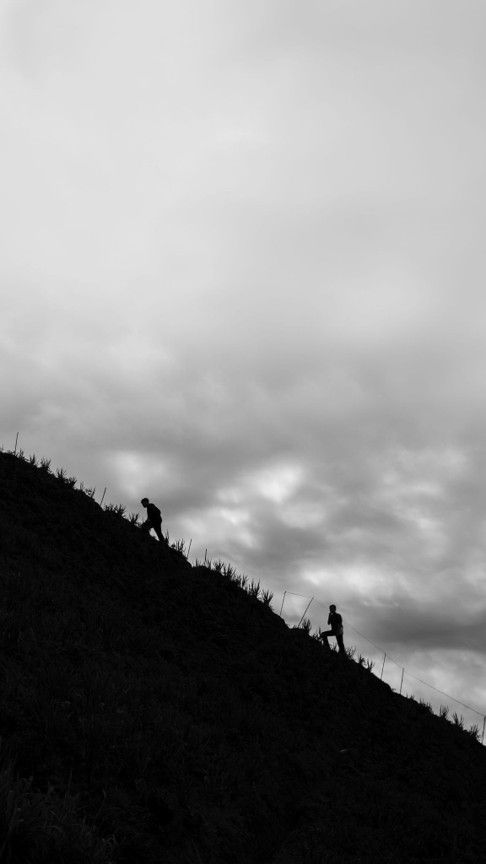
“Uh…trudging. You know, trudging?” If you have seen A Knight’s Tale, you may remember this wonderfully strange scene. William Thatcher comes across Geoffrey Chaucer walking along the road—dirty, disheveled, and apparently having a very bad day. When William asks what he is doing, Chaucer explains that he is “trudging.” He defines it as the slow, weary, depressing, yet determined walk of someone who has nothing left except the impulse to simply soldier on. And if this doesn’t give a good impression of the healing, I don’t know what does. Of course, this is not the inspirational-poster version of healing, or where you wake up one morning, discover that you have finally “done the work,” and suddenly become the emotionally regulated, perfectly self-aware, spiritually mature person you always hoped you would be. In my years of working as a therapist, I have found that real healing is often much less glamorous.Often, healing looks like trudging, slowly putting one foot in front of the other. Then another. And another. Sometimes you make great progress. Sometimes you seem to walk for miles only to discover that you have somehow arrived back at the same place. Sometimes there are beautiful views, sometimes there is rain, and sometimes both at the same time. There are blisters and you seriously question why you thought walking this particular road was a good idea in the first place. Yet you keep going because the horizon is a little closer, things just a smidge brighter. That is the part of healing we do not talk about nearly enough. We Like the Destination More Than the Journey We live in a culture that loves transformation stories. We love before-and-after pictures. We love placing our hand against the camera and pulling it away fully transformed while “Can we skip to the good part?” plays in the background. We love the moment in a movie when the main character finally realizes what has been holding him back, says something profound, and rides triumphantly into the sunset. I’m here to tell you that therapy does not always work that way. Neither does life. You may understand exactly why you react the way you do and still react that way. You may know that your childhood shaped you without knowing how to stop carrying your childhood into every relationship. You may recognize that you need better boundaries and still feel guilty every time you set one. You may forgive someone and still feel hurt. You may know intellectually that you are loved and still struggle to believe it when you are lonely. None of this necessarily means you are failing but it may mean that you are trudging. Healing is rarely a straight line from brokenness to wholeness. It is more like a pilgrimage. And pilgrims, by definition, travel; they make stops, they rest, they get lost, they get sick, and they have to ask for directions. Occasionally they may get waylaid for a long time to build up money, strength, or whatever else is needed to continue the journey. Then they keep going. The Trouble with the Shortcut One of the hardest things about healing is that we want a shortcut, and it makes sense. If something has hurt for ten years, we would prefer not to spend another ten years working through it. If a marriage has developed unhealthy patterns over fifteen years, it would be wonderful if one good conversation could repair everything. If grief has taken up residence in our hearts, we would love to tell it that its lease has expired. But psychological and spiritual growth rarely responds to our preferred timeline. There are reasons for this. Our brains learn through repetition. Relationships develop through repeated interactions. Habits are formed over time. Attachment patterns are not created in a single afternoon, and they generally are not undone in one either. This is one reason therapy can sometimes feel frustrating. A person may say, “I understand this now. Why am I still doing it?” And I tell them that understanding is important, but understanding is not the same thing as transformation. Knowing the road is not the same thing as walking it. And walking it once is not the same thing as learning how to travel it. Sometimes we need to walk the same stretch of road again and again before we begin to recognize the landscape, remember where the pitfalls are, and hopefully learn a better path. There Will Be Stops Every pilgrimage has stops.This matters because we often interpret stopping as failing. Yet, working on ourselves can involve hitting a plateau where we don’t see the effort changing the landscape. But stopping is not necessarily quitting. Sometimes you stop because you are tired, or need to heal a new or remembered injury. Sometimes you stop because you have reached a place where you need to reconsider your direction. There is wisdom in stopping. In therapy, progress sometimes looks like learning to pause before reacting, or noticing an emotion before immediately trying to get rid of it. It may mean taking a breath before sending the text or sitting with discomfort rather than immediately distracting yourself. That pause can feel like doing nothing. Instead, think of it as practice. A person who has spent years responding automatically may discover that there is now a tiny space between feeling something and acting on it. That tiny space can be the beginning of freedom. The pilgrim has stopped. But the pilgrim has not quit. Sometimes You Will Walk Backward Perhaps the most discouraging part of healing is what we call a “setback.”You thought you had moved beyond something and then suddenly you find yourself doing it again. You thought you had learned not to take everything personally. Then somebody sends a three-word text—“We need to talk”—and your nervous system immediately begins preparing for the apocalypse. Welcome to being human! A setback does not erase progress, in fact, sometimes the difference between then and now is not that the old pattern never happens again. The difference is that you recognize it sooner. This means you might recover more quickly, apologize more easily, or ask for help as you need it. Very simply, that is progress. Is it glamorous? No. But eventually you realize the road may look familiar, but you are not the same person walking it. “I Will Make a Way in the Wilderness” There is a beautiful image in the prophet Isaiah: “I am about to do a new thing; now it springs forth, do you not perceive it? I will make a way in the wilderness and rivers in the desert.” —Isaiah 43:19 I have always liked the fact that God does not promise that there will be no wilderness. However, He does promise to make a way through it. And this distinction is so important. We can assume that healing means God will remove every difficult thing from our lives. If we pray hard enough, understand enough, or finally get our lives organized enough, the wilderness will disappear. Reading Scripture tells a different story; that there is a road through the wilderness. Faith does not necessarily eliminate the hard road but faith can give us the courage to keep walking it. As a Catholic therapist, this is where psychology and faith can sit together quite comfortably. Therapy helps us understand our wounds, relationships, patterns, emotions, and behaviors. Faith reminds us that our wounds are not the entirety of our identity; we are not simply the sum of our trauma, our mistakes, our diagnoses, our family history, our regrets, or our worst moments. There is more to the story and sometimes healing is learning to live from that larger story. Pay Attention to the Small Milestones When people are trudging, they need markers otherwise, the road can feel endless. So pay attention to small changes: maybe you handled a difficult conversation differently, maybe you noticed your anxiety before it became overwhelming, or maybe you recognized that your anger was covering sadness. We tend to measure healing by asking, “Am I completely better?” and that is often the wrong question. A better question is: “Am I different than I was?” And then: “What is different?” Progress becomes easier to see when we stop looking only for dramatic transformation. Pilgrims count milestones and we should too. There is something else worth counting along the way: the days themselves. In an earlier reflection, Teach Us to Number Our Days, I wrote about Psalm 90:12: “Teach us to number our days, that we may gain a heart of wisdom.” The prayer is not simply about counting how many days we have left. It is an invitation to pay attention to the days we actually have. When we are hurting, we can become so focused on the destination that we miss the day we are standing in. We spend so much energy asking, “When will I finally be better?” that we forget to ask, “What is this day asking of me?” Maybe today is a day for courage….rest…or an honest conversation. Not every day has to be a breakthrough. Some days are simply mile markers. And if we learn to number those days—to notice them rather than rush past them—we may discover that healing has been happening in places we were too busy looking for it to see. Learn to Travel Light There is another lesson pilgrims understand: you cannot carry everything. At some point, the backpack becomes too heavy. Healing often involves discovering what we have been carrying that no longer belongs to us: old shame, other people's expectations, the need to be liked by everyone. This list could be endless because we all have our things that we carry, even I do. Sometimes things need to be confronted, forgiven, grieved, or accepted. And some things need to be put down. This does not mean pretending the past did not happen, it means refusing to make the past carry your backpack forever. Healing is not always about becoming someone entirely new. It can be about becoming the person you were created to be underneath everything you have been carrying. Do Not Trudge Alone There is a reason pilgrimage has traditionally been a communal experience. People walk together and share food and stories, they encourage one another, and complain about their feet hurting. They offer direction when others are lost. Healing works better this way too, when we share it with others. A good therapist can walk with you for part of the road. Friends and family can walk with you. A spouse can walk with you. A faith community can walk with you. And every now and then, you need someone who can simply say, “Yes, this is hard. Keep going.” Not every problem needs immediate advice. Sometimes the most healing thing another person can offer is presence. Discovering that you are not the only person who has struggled with this particular stretch of road brings a lot of comfort, and power. What Do You Do When the Road Gets Long? If healing feels like trudging right now, a few simple practices can help. Keep your expectations realistic.
Healing is not a race. Give yourself permission to grow slowly. Measure progress differently.
Instead of asking whether the problem has disappeared, ask whether you are responding to it differently. Take the next step.
You do not need to figure out the next fifty miles. What is the next healthy thing you can do today? Rest without quitting.
A Sabbath is not a failure of productivity. Sometimes rest is part of the journey. Notice the scenery.
Do not become so focused on reaching the destination that you miss the life happening along the way. Accept help.
Therapy, friendship, community, prayer, spiritual direction, medical care, or other forms of support can all be part of the journey. Remember your story is still being written.
A difficult chapter is not the same thing as a difficult ending. And perhaps most importantly: Do not confuse slow progress with no progress. The Road of Happy Destiny There is a phrase used in Anonymous groups that I find beautiful: “We will trudge the Road of Happy Destiny.” The phrase comes from the Twelve-Step tradition, where recovery is described not as arriving at some perfect endpoint but as continuing to walk the road of recovery, one day at a time. There is something almost comical about putting the words trudging and happy destiny together. Trudging sounds miserable. Happy destiny sounds like a Disney movie. But when we put them together you get something much closer to real life. The road can be difficult and still be good. You can be frustrated and still be healing. You can even occasionally sit down on the side of the road, question every life decision that brought you there, eat a snack, and eventually get back up….I’ve been there. Perhaps this is part of what we miss when we imagine healing as a destination because healing is not simply the place where we finally arrive. It is the person we become while walking. The patience we develop, the humility we learn, the courage we practice. So if today feels like one of those days when you are not exactly flourishing, thriving, conquering, or becoming your best self, perhaps there is another word for it. Maybe you are trudging and this is okay. Put one foot in front of the other and take the next step. Rest when you need to, let someone walk beside you, and look up occasionally. The road you walked is behind you, and when you take the time to see where you came from, things can look a lot better. And trust that the road does not have to be easy to be meaningful. The wilderness can still contain a path. The person who keeps walking, even slowly, even imperfectly, even with a few complaints along the way, may discover that trudging was not merely a sign that life was difficult. It was evidence that they had not given up. That is the strange gift of the long road that we are, perhaps, trudging towards a happy destiny. Thoughts from the Couch From the couch, I have come to appreciate just how rarely healing looks the way we imagine it will. We tend to think healing means arriving somewhere: I used to struggle with this, but now I don't. And while those moments certainly happen, much of the work is quieter. It is learning to recognize an old pattern a little sooner. It is responding differently the next time. It is becoming more comfortable with discomfort. It is realizing that the thing that once knocked you flat now only makes you stumble. That may not feel particularly impressive. But it is. I sometimes tell clients that therapy is less like taking an elevator and more like walking a trail. Unfortunately, there is no express elevator to emotional health. There are switchbacks, rest stops, wrong turns, steep inclines, and occasionally a spectacular view that makes you realize why you started walking in the first place. Also, there is often mud. Lots of mud. The goal isn't to avoid every difficult part of the journey. The goal is to become someone who can walk through those difficult places with greater wisdom, resilience, connection, and hope. That is one of the reasons I appreciate the image of pilgrimage. A pilgrim doesn't expect the road to be easy. The pilgrim understands that the road itself is part of the journey. If you find yourself trudging right now, you don't necessarily need to have the entire road figured out. You may simply need to determine the next step. Next steps look like having hard conversations, creating boundaries, forgiving those that have harmed us, and sometimes it is making an appointment with a therapist and admitting, “I'm tired of walking this part of the road by myself.” At Holy Family Counseling Center, we believe therapy is not about fixing people who are broken. It is about accompanying people as they grow, heal, and become more fully themselves. For those who want it, faith can be part of that journey as well—not as a substitute for sound psychological care, but as another source of meaning, hope, and perspective. You don't have to know exactly where the road ends. You just have to be willing to take the next step. And if the next step feels more like a trudge than a triumphant march, that's okay. Most worthwhile journeys probably do.